HxS
Define register interfaces once and generate the HDL, software access layers, and documentation your teams need.
Replace duplicated interface specs with one trusted definition.
Instead of scattering interface details across HDL, software headers, and documents, HxS gives your team a single description to maintain. Every output is regenerated from that description whenever the design changes.
- Describe registers, fields, blocks, delegates, and bus-level control points in a declarative model.
- Generate consistent outputs for hardware, software, and documentation teams from the same source.
- Keep all teams working from the same interface definition throughout development.
- Eliminate rework caused by outdated or inconsistent specifications.
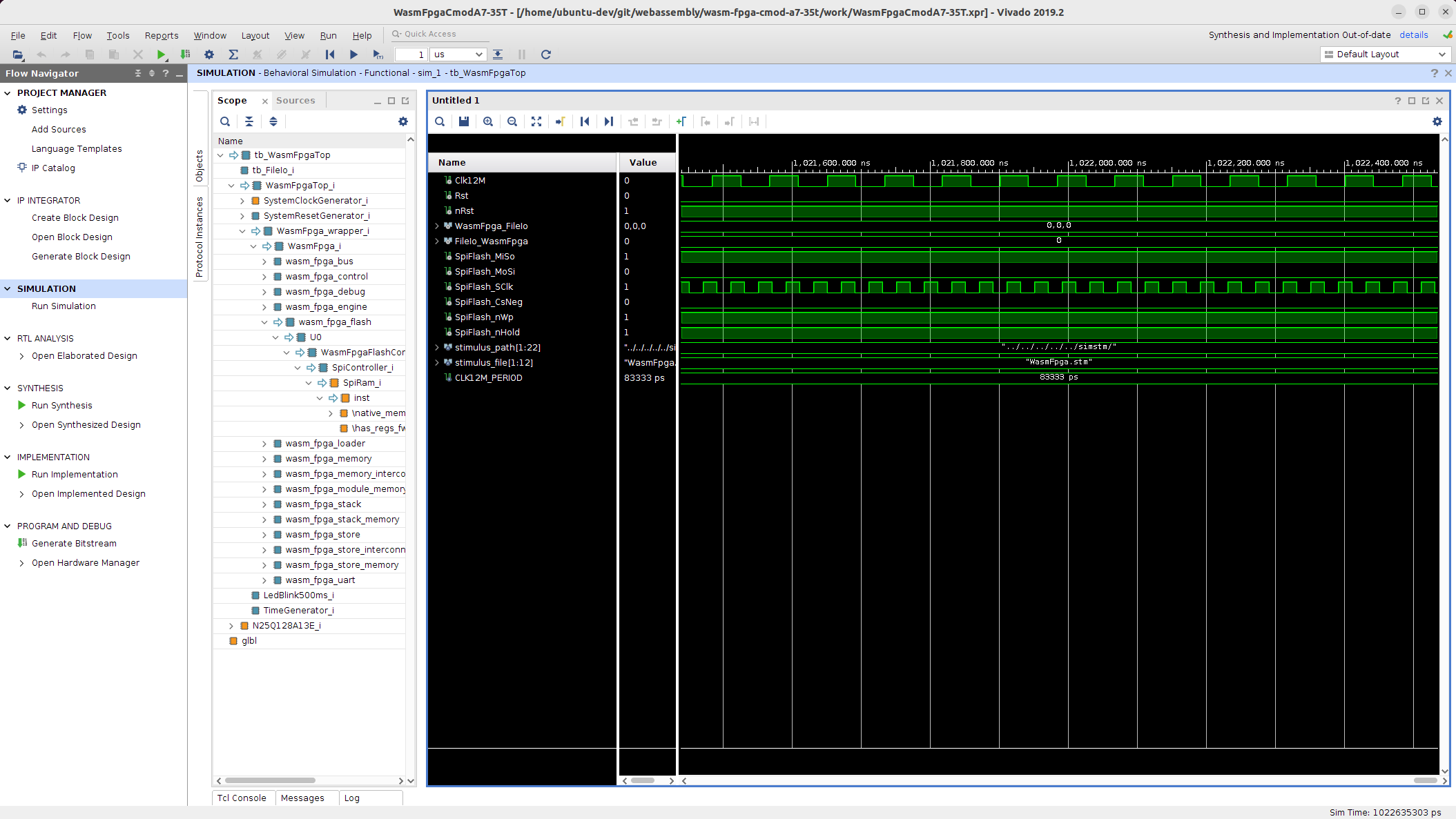
Validate interface decisions early with generated artifacts.
Because both hardware and software artifacts are generated from the same model, teams can start working in parallel from the first design iteration — even before the hardware is complete.
For FPGA and ASIC developers
- Generated VHDL is readable and structured, making it straightforward to inspect and integrate.
- AXI-Lite, Avalon, and Wishbone bus types are supported.
- All common register variations are covered, including synchronous and asynchronous registers.
- Clock domain crossing is handled in the generated code, so outputs are ready to use on target hardware.
For embedded software developers
- Generated software layers provide register access without manual bit manipulation.
- C/C++, Python 3, and Rust outputs are supported.
- Bare-metal and embedded Linux environments are both supported.
- Software development can begin immediately, because register access artifacts are available from the start.
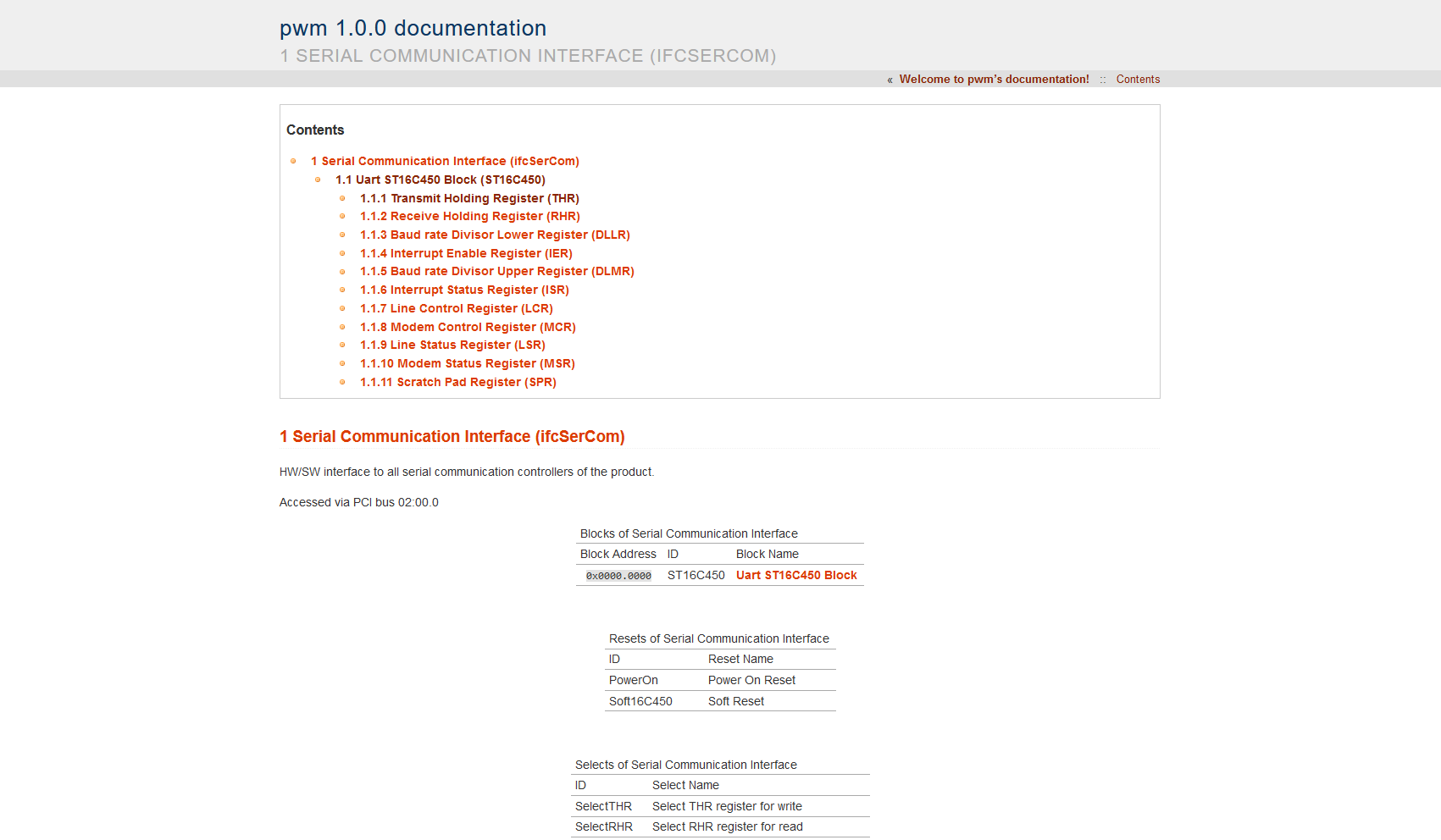
Generate documentation your team can trust.
HxS generates register documentation from the interface description. Whenever the interface changes, the documentation can be rebuilt to stay aligned with the generated code and the actual design.
- Start documenting register interfaces from the first design iteration.
- Rebuild documentation whenever the interface changes to stay in sync automatically.
- Output formats include PDF, Word, ReStructuredText, and HTML.
- Combine generated register documentation with hand-written content for complete specifications.
- Plug into existing documentation styles and publication workflows.
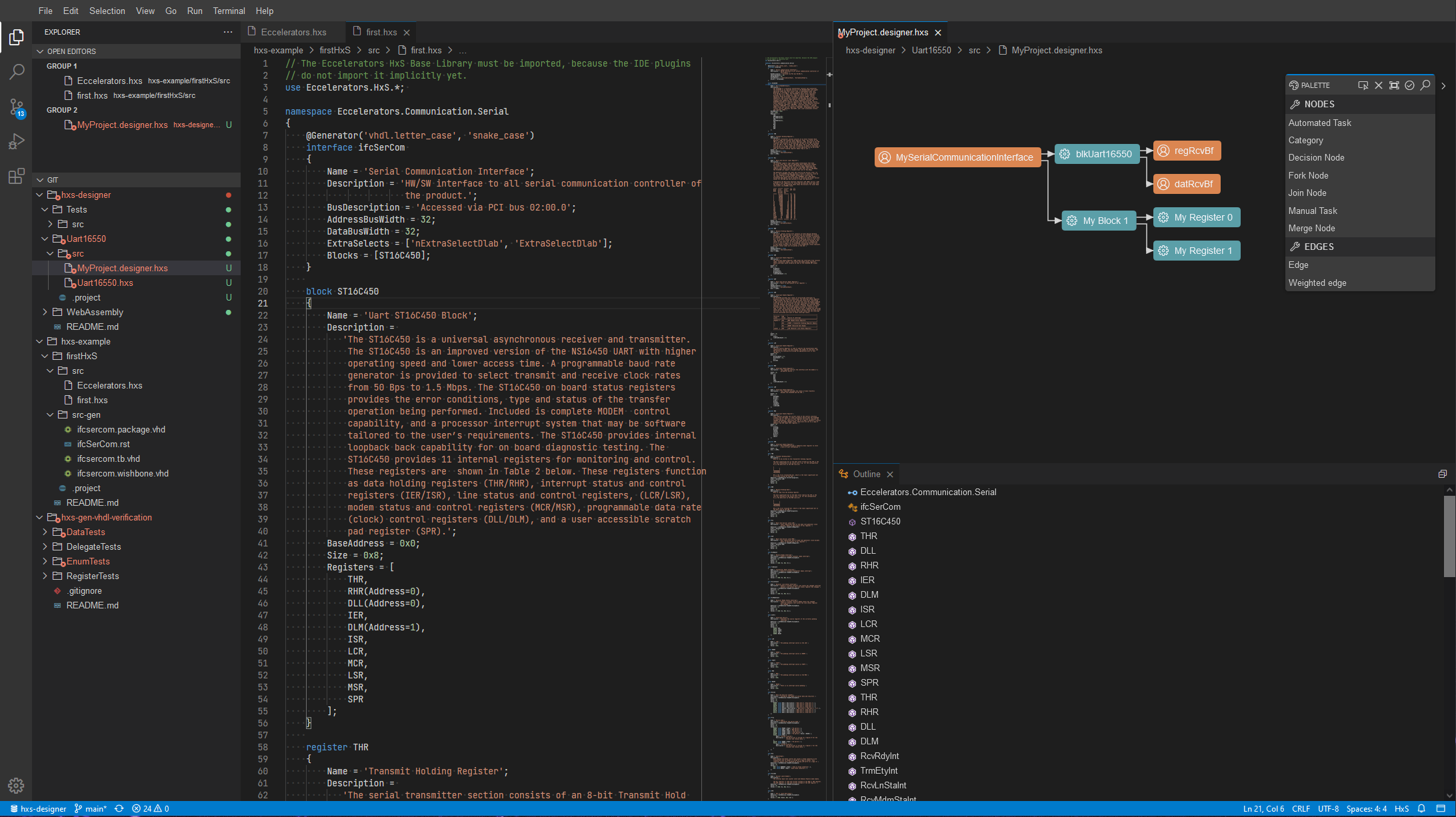
Work in the environments your team already uses.
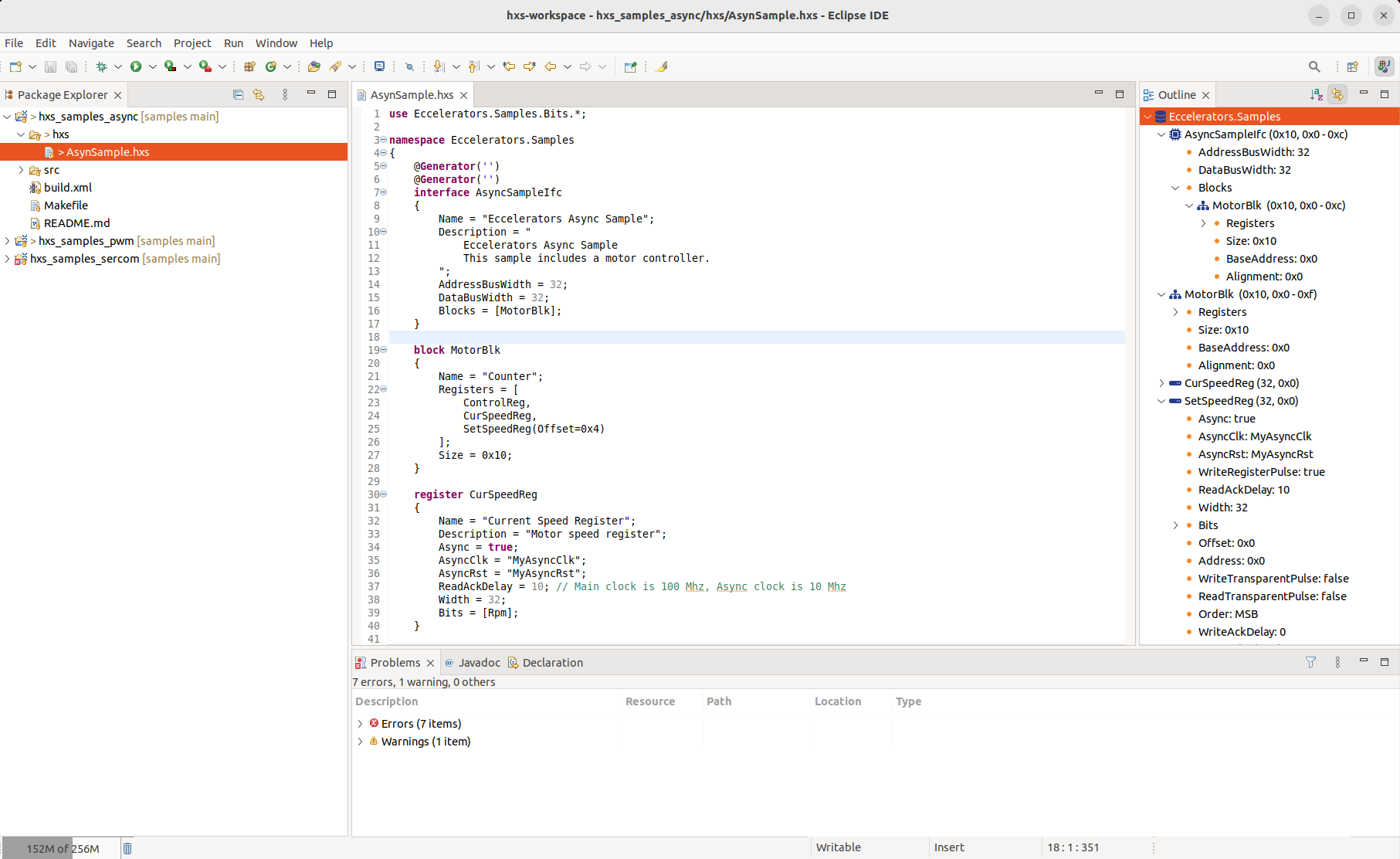
HxS integrates into familiar development environments, so interface design fits into everyday engineering work rather than requiring a separate specialist setup.
Available integrations
- HxS Plugin for Eclipse (Updatesite)
- HxS Extension for VS Code
- HxS Extension for GitPod and Eclipse Theia
- Windows and Linux environments are supported.
Plugin support includes
- Syntax coloring and keyword completion.
- Auto indentation and formatting.
- Inline documentation and editing assistance while working on interface descriptions.
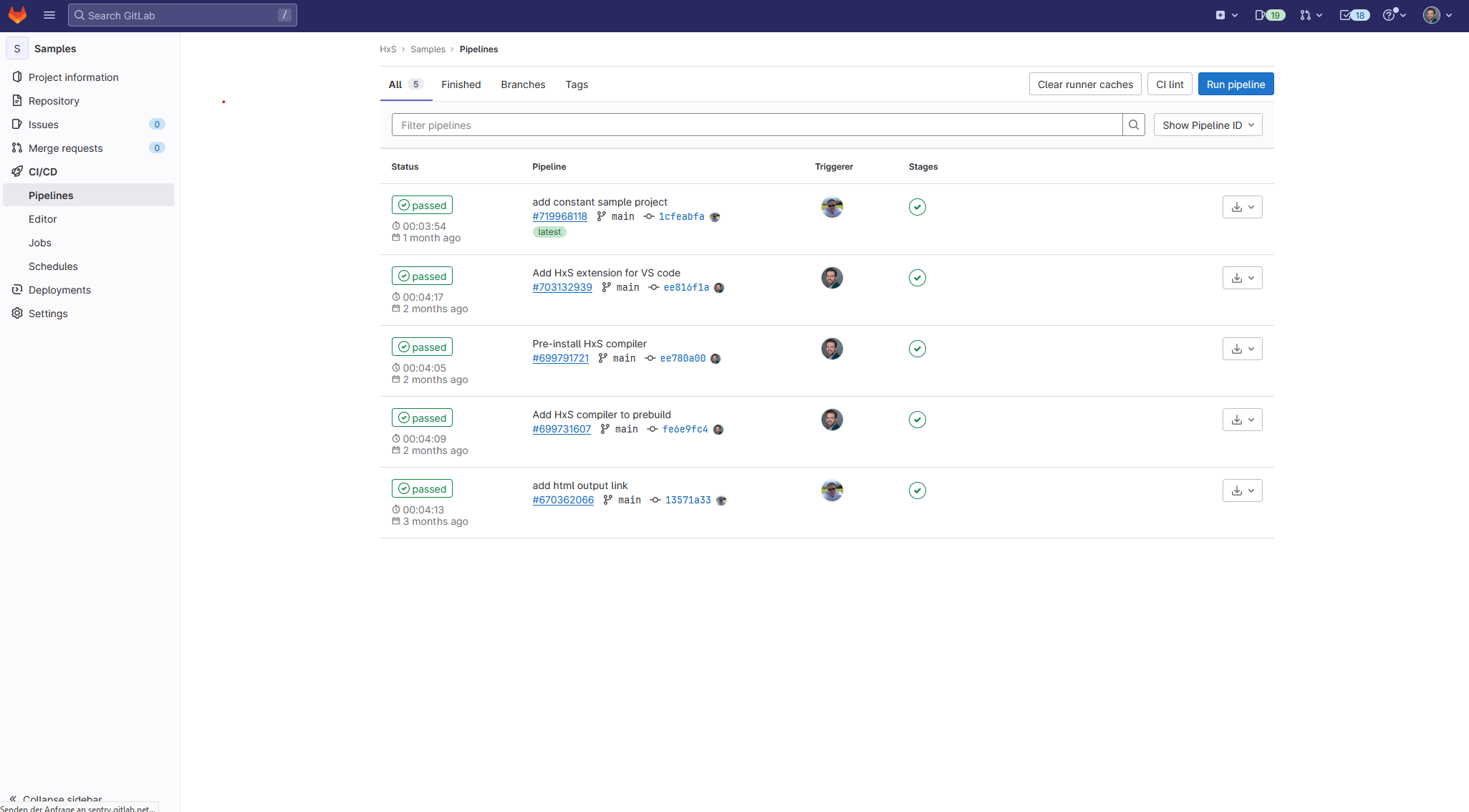
Include interface generation in your build pipeline.
The HxS compiler is designed for reproducible generation workflows, so it fits naturally into version control and automated build systems.
- The command-line compiler gives you full control over what is generated and when.
- Docker images are available for consistent environments across local and CI builds.
- Windows and Linux are both supported.
- Try the HxS Docker image to get started quickly.
- Browse example projects on GitHub to see complete workflows.